BjjSkills
The Triangle Choke
 It's a known technique in judo as well. The triangle symbol, represented on many BJJ logos
Rear Naked Choke
 It's a very basic choke. Lot of martial arts covers this technique and the defense of it.
Omoplata
This is a shoulder lock, ashi-sankaku-garami, "triangular entanglement”
The Kimura
 It's a judo move: reverse ude-garami arm lock, which is often called the "Kimura" in BJJ. The name comes from Masahiko Kimura a japanese judoka.
Guillotine
 It's a frontally applied choke, which can affect your breath and bloodflow as well, depends on the details of the application
Ezekiel Choke
Mainly a gi choke
Arm Triangle Choke
 An very effective head and arm choke
Americana
 A basic move, puts rotation on the shoulder as an opposite angle than the kimura
The Straight Armbar
 This submission is the hyperextension of the arm and elbow joint.
You can apply it from almost any position with some cleverness, most popular from mount and guard, or even from escaping from bottom side control.
- A BJJ Match is a Zero-Sum Game
When I was filming the BJJ Foundations instructional with Cal MacDonald he brought up a really interesting point…
He said that if you’re in a serious match – a competition or a deathroll at the club – then at a tactical level, jiu-jitsu becomes a zero-sum game.
That means every grip, every hook, and every adjustment of position becomes win-lose.
If you win that exchange, your opponent loses. If he wins, you lose.
Let’s say that you’re on your feet and things are 50-50. Now you secure a slightly better grip on your opponent; things might now be 55-45 in your favour.
Now you have a slightly better chance of getting a takedown or jumping into a submission, and his emphasis should be on getting back to neutral rather than attacking.

Let’s turn things around…
Say that you’re on the bottom of a loose side control. That’s not great things, so let’s say that the situation is 60-40 in your opponent’s favor.
But now he gets an underhook on your far arm… now it’s 65-35. His number is going up, yours is going down.
Now he secures a tight crossface and turns your head so you’re looking away from him and the situation is 70-30.
Ooops – you let him collapse your near side arm frame…. now it’s 75-25
He walks his legs towards your hips, folding your legs so they point away from him, making it that much harder for you to reguard… 85-15.
You get the idea!
(Incidentally, this is very similar to Rob Biernacki’s concept of “What’s the score,” where we assign each player one point each for proper base, posture and structure, with the best score you can hope for being 3-0 in your favor).
So if you’re flow rolling, or drilling, or playing certain games, then go ahead and take it easy. Give your opponent the grips he wants, let him progress to a better position, and try to fight your way out.
This can be fun and you’ll learn lots.
But when the chips are down and the rolling is serious, then don’t concede an inch.
Follow the advice of an old Luta Livre coach, Roberto Leitao, who once said, “If I don’t know, I won’t allow“.
Serious jiu-jitsu matches are zero-sum affairs.
Stephan
P.S. BJJ Foundations is without a doubt » Continue Reading.
The post A BJJ Match is a Zero-Sum Game appeared first on Grapplearts.
2025-07-14 05:48:40
- 3 Great Ways to Pass Butterfly Guard
The butterfly guard offers your opponent two different types of control that set up his attacks and make it difficult for you to pass his guard.
Screw up even a little bit and you’ll find yourself hoisted into the air and swept or caught in a devastating leglock.
To shut him down and pass his guard you first need to understand the control points he potentially has in butterfly guard…
The first type of control in butterfly guard are the grips, for example, collar ties on your neck, grips on your wrist, the underhook controlling your shoulder, belt grips, the 2-on-1 grip or the armdrag grip.
To deal with his grips you have to handfight, handfight, handfight! Do not concede superior grips to your opponent because you’ll be giving him a HUGE advantage.
The second type control are his instep hooks between your legs. The insteps are the heavy hitters of the butterfly guard because they lift and off-balance you, as well as making it very hard for you to run around his guard since he can just keep his hooks sticky against the inside of your legs and track you.
Neutralising the Butterfly Hooks
To pass butterfly guard without backing away you have two basic options…
First, you can break any grips and back out. Now that his hooks are detached, getting to a dominant position involves guard passes like the toreando, the kick pass, the knee cut, the leg drag, and submission-based passes usually involving the guillotine or Kimura controls.
Typically, this detach-and-pass approach requires faster, more explosive passing movements.
The second approach is to stay close but use leg pummelling and hip shifts to nullify the effectiveness of his guard. Since you often can’t see what’s going on with his feet at this close range this approach often requires more sensitivity but less speed, and often results in pressure-based guard passes to get past his legs.
Neutralising the Butterfly Hooks While Staying Close
Let’s focus on three different ways to shut down the effectiveness of his instep hooks without backing all the way out of butterfly guard.
First, you can use a floating approach…
In the floating approach you’ll force your opponent onto his back (i.e. recumbent butterfly guard) and put your weight on his insteps and shins. Now actively pour arms to keep your balance, then use a combination of hip shifting, » Continue Reading.
The post 3 Great Ways to Pass Butterfly Guard appeared first on Grapplearts.
2025-07-03 17:57:26
- Inside vs Outside Leglock Entries
Leglock entries can be divided into inside and outside entries, and you need them both to be a high-level leglocker!
Essentially, inside entries involve you bringing a leg between your opponent’s legs, whereas an outside entry involves moving into a leglock position by going around your opponent’s legs.
Examples of inside entries might include using the instep guard to shoot for the SLX or standard ashi position or a butterfly guard to cross ashi transition.
Examples of outside entries might include using the K Guard to enter into backside 50-50 or a de la Riva guard to outside ashi on the far leg.
These can be difficult to visualise, so in the video below, you’ll see examples of both inside and outside entries and how you might use them together to catch your opponent more easily in a match-ending submission.
Thanks to Chris Wojcik for this video. Chris is a leglock expert, ADCC competitor, and the creator of The Grappler’s Diary. He shot this breakdown after I spoke with him on episode 410 of The Strenuous Life Podcast.
Good luck with your training! Stephan Kesting
P.S. You can check out my in-depth podcast with Chris about how B Team prepared for ADCC and CJI on my podcast here.
P.P.S. Check out The Ultimate Leglock Deal to get most comprehensive guide to modern no gi leglocking. I am so convinced that this is the best resource you can have for leglocking that I am offering a 100% moneyback guaranteee on this item for a full 365 days if you choose to purchase it.
The post Inside vs Outside Leglock Entries appeared first on Grapplearts.
2025-06-12 00:21:25
- For Fastest BJJ Improvement Specialise, Don’t Generalize.
There’s no way around it, when you first start jiu-jitsu you have to be a bit of a generalist.
You’ve got to learn an escape from side control… an armbar from mount… a sweep from closed guard… a choke from the back… and so on.
What you’re doing with this approach is trying to develop a couple of offensive and defensive options from the top and bottom for each of the major positions on the ground, i.e. guard, side control, knee ride, mount, back, and turtle.
(This approach of filling out your positional matrix on the ground is the topic of my Roadmap for BJJ book, which has been downloaded for free over 100,000 times.)
But eventually, usually around blue or purple belt, it’s best to shift approaches and start becoming a bit more of a specialist.
That DOESN’T mean dedicating your entire life to a position or a technique.
Instead, it means taking a topic (a position, a strategy, or a technique) and going DEEP on it. Spend about 80% of your disposable training time focused on that topic.
For that topic, research all your offensive options, all the likely defensive options, and which of those options work best for your body type.
Take advantage of competition footage, asking your instructors for feedback, workshopping with your training partners, studying instructionals, and every other source of information you can think of.
Then you’re going to do a LOT of focused drilling, positional sparring, and targeted games to improve in just that one area. Then, use your free sparring time to further develop your skills in that one area.
This will help you blast through your plateaus, train with people smaller and less skilled than you, and improve your training partners.
(Even a white belt will get pretty good at armbar defense if all you’re ever going for is armbars and you show him the counters.)
These training blocks can last a week, a month, or even half a year.
When your progress levels off and your return on training investment diminishes, switch gears, pick a new topic, and repeat.
I’ve used this approach for about 80% of my training these last 30 years in the art. I’m not especially physically gifted, so most of my development can be credited to this approach.
Some of my areas of » Continue Reading.
The post For Fastest BJJ Improvement Specialise, Don’t Generalize. appeared first on Grapplearts.
2025-05-03 23:10:06
- Training to Deal with Adrenaline and Emergency Situations
The fight-or-flight reflex is always lurking just below the surface. When things get sufficiently stressful, our hormonal system dumps enormous amounts of adrenaline into our bloodstream, and — BOOM — suddenly we’re ready for action.
That adrenaline serves a purpose: it elevates your heart rate, makes you much stronger, more pain tolerant, and able to ignore injury. If you ever have to lift a car off a child, you don’t want to be calm. Instead, you want to be mad, scared, enraged—whatever it takes to get into that adrenaline-soaked state of high arousal to lift the damn car with your bare hands.
But that superhuman strength comes at a cost; as adrenaline floods your system, you lose a significant amount of fine motor control and higher brain function. Take whatever IQ you started with and cut it in half.
Episode 422 of The Strenuous Life Podcast may give you some clues about how to manage that adrenaline intelligently. Check it out on Spotify, Apple Podcasts, all other podcast players, or stream the audio using the player immediately below…
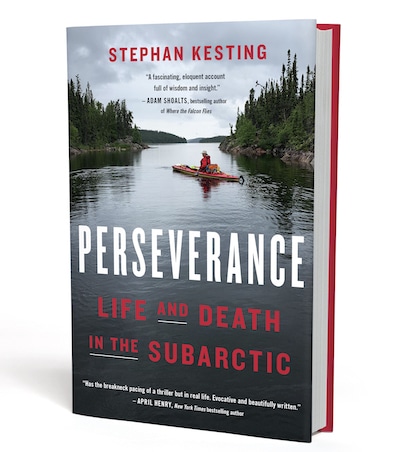
This episode of The Strenuous Life Podcast is an excerpt from the audiobook version of Perseverance, Life and Death in the Subarctic which you can check out anywhere you get books including the links below:
Perseverance on Amazon.com Perseverance on Barnes and Noble Perseverance on Indigo.ca Any independent bookstore
Good luck with your training and all your endeavors
Stephan Kesting
The post Training to Deal with Adrenaline and Emergency Situations appeared first on Grapplearts.
2025-04-24 17:46:55